
What was the ASF Olympic Development Camp?
The ASF Olympic Development Camps are three camps the ASF have a year to help skaters learn about the Olympics and learn things that are going to help them on their way. They are basically to get skaters ready for the Olympics. We were stoked to have the Australian Olympic Committee fund them with some help from the Australian Institute of Sport.
ASF Olympic Development Camp Melbourne April 2017 from Australian Skateboard Federation on Vimeo.
Our goal for the camps are to give practical knowledge that will help them on the way to the Olympics, but we also wanted to give them some knowledge that they can apply to their potential careers as pro skaters outside the Olympics. Things to do with injury recovery, general skate business, sports science and a general introduction to the Olympics.
From my own point of view I want to equip these skaters with the best practical knowledge of how to succeed in skateboarding, how to keep their bodies functioning for a full skateboarding career both in and out of the Olympics, and share as much knowledge as we could.
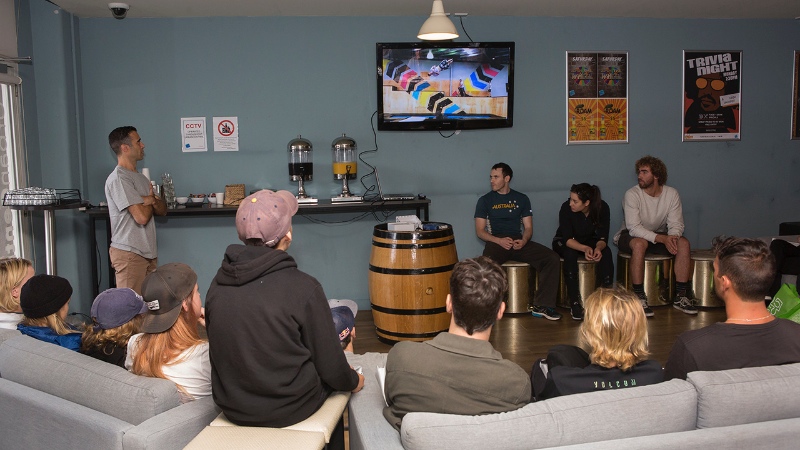
Hearing from Olympians (pic: Donnini)
What skaters were involved?
We reached out to all the Australian skaters that compete in Street League, XGames, and Vans Park Series. They were all very receptive to our program and our plan to help competing skateboarders with resources and knowledge to help them.
For the first camp all of those guys were away overseas, but we are likely to be helping all of them in one way or another in the future.
We had a lot of younger shredders that skate the bigger competitions that may not yet be in Street League, or the Vans Park Series main event, but we would like to help them with whatever resources we can to get them on their way.
We chose the riders we did on their Australian Skateboarding Federation ranking as well as taking into consideration skaters general ability and how fast they were progressing.
We have a committee on the ASF of myself, Andrew Mapstone and Chris Middlebrook making decisions on the ASF High Performance program.
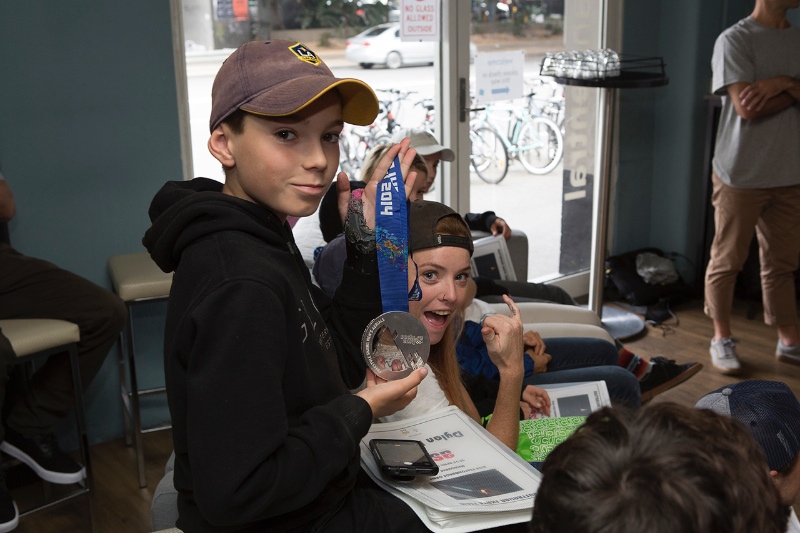
Dylan Donnini Checks out a silver medal (pic: Donnini)
Is there anything you would recommend to skaters wanting to get on them in future?
Yes, the key thing is to skate competitions. Getting a good ASF ranking is important. There are a lot of amazing skaters out there and the key way we differentiate is through competition results. Competition results aren't absolutely everything, but they play a key part. Another key part is how far skaters are progressing to skating the highest level.
We want to give opportunities to skaters that show the potential to make Street League, XGames and Vans Park series. Thats our priority. If a skater isn't capable of skating those events, its not likely they will get to the Olympics.
There has been a bit of a problem the last few years with street in that there hasn't been formats that have allowed the top skaters to shine in Australia, so lots of the really good guys living in Australia haven't been competing so much. Im hoping to get a few more of the top guys keen again on comps through having formats that reward top skating, rather than just reward the skatepark comp dogs. I want to make contests more desirable for the most skilled people.
My experience with skate contests has been amazing. Some of the events I have been to all over the world have been some of the raddest celebrations of skate culture I have seen. Probably the best times of my life where I met lots of great people. Comps bring skaters together to skate and have a great time. Its the reason why I chose to go into this area after being a pro skater. Its my passion.
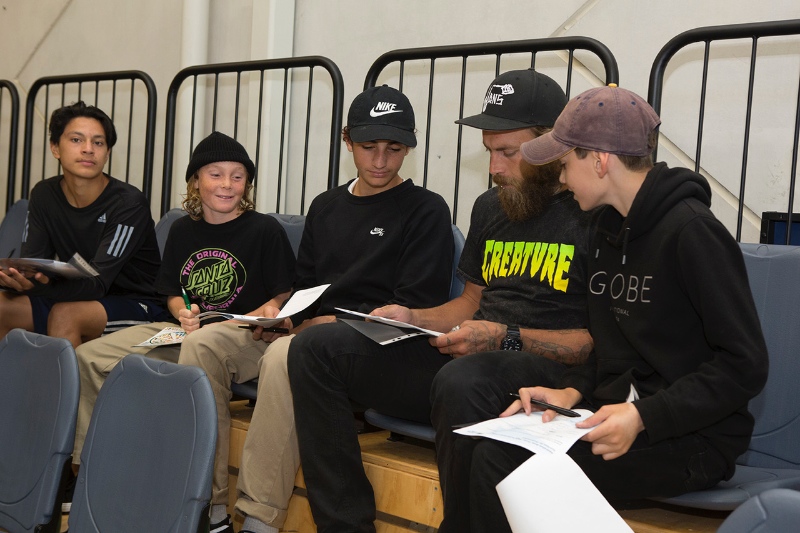
Technical Tricks require a lot of paperwork (pic: Donnini)
What was your role in the camps?
My role is head of Coaching, and I helped build the camp schedule with Paul Hogan with some help from the Australian Institute of Sport.
Coaching to me with skateboarding is a funny term. It really has a strange connotation to me as a skateboarder of 30 years. If I think of a person yelling out to a skater from the side of a skatepark I cringe a little bit because to me that really the outcome I want to see from all this. I think with skateboarding the coaching needs to be a lot more subtle and a lot to do with all the things that go along with being a competing professional skateboarder, rather than just the technical aspect of skateboarding.
Teaching kids how to travel better, like when you go to the USA the food you find in most places is terrible and it can have such a bad effect on you if you don't search out decent food, and teaching the skaters ways to come back from injury faster, and teaching them how to make the right decisions in business, life and in the skateboard industry.
There is a lot to succeeding as a professional competing skateboarder and the technical side of how to actually skate is just a small part.
The skaters on our camps obviously have such good skills the emphasis was less on the technical side as it is on helping them with all the stuff Aussie pro skaters in the past had to work out for themselves. Some of that stuff can be difficult to learn when you are travelling by yourself thousands of Kilometres from home on a couch surfing trip to California or Europe.
For me my priority is passing on all the knowledge I got from skating contests all over the world for 16 years. I feel like there was so much I learnt through experience that I can pass straight on to kids that are just starting out.
Its a great lifestyle travelling the world going to comps, but there are a lot of mistakes you can make. I saw people from my generation make some big ones and thats me included. We aim to make the journey smoother and make an easier path to success weather these skaters make the Olympics or not.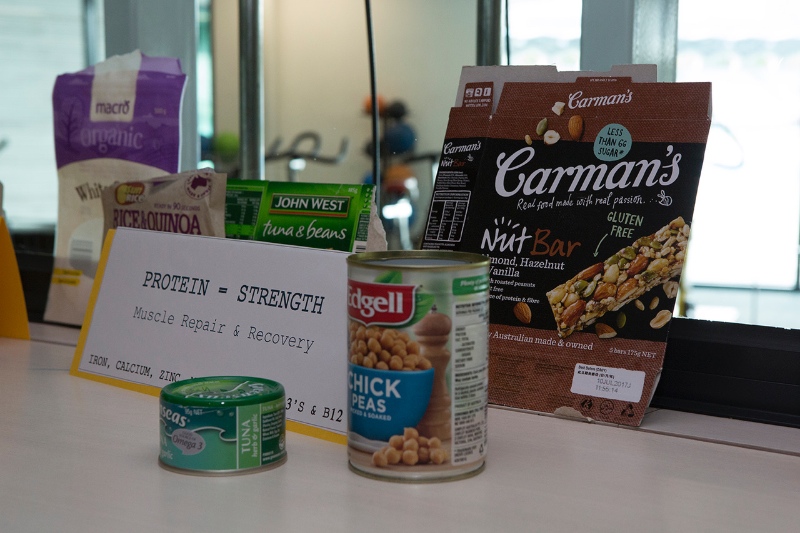
Food Lessons (pic: Donnini)
Who were the coaching staff?
On the first camp the people we had on our coaching staff were myself, Andrew Mapstone, Russell Grundy, Shari Lawson helping with the girls, and we also had RJ Barbaro and Will Stoyles come along. My goal was to get people that understand skate history, skate culture, and have a history being around pro skateboarders the ones that are giving tips and helping out.
I really felt it was important to have people that spoke from direct experience of competing, as well as experience in the skateboard industry and pro skateboarding. Andrew Mapstone to me is someone that has so much knowledge of skateboarding and Australian Skaters he is a key person in the program. The last thing I want to do is have people giving info to the skaters that they are just guessing and not coming from direct experience.
We also had James Karagiorgiou from the Australian Institute of Sport, as well as some other specialists talking to the skaters about different aspects of sports science, which is anything to do with keeping your body in good shape to shred. At the moment we are all just meeting each other and seeing how everything works. All in all it was really fun and the skaters got a lot from it.
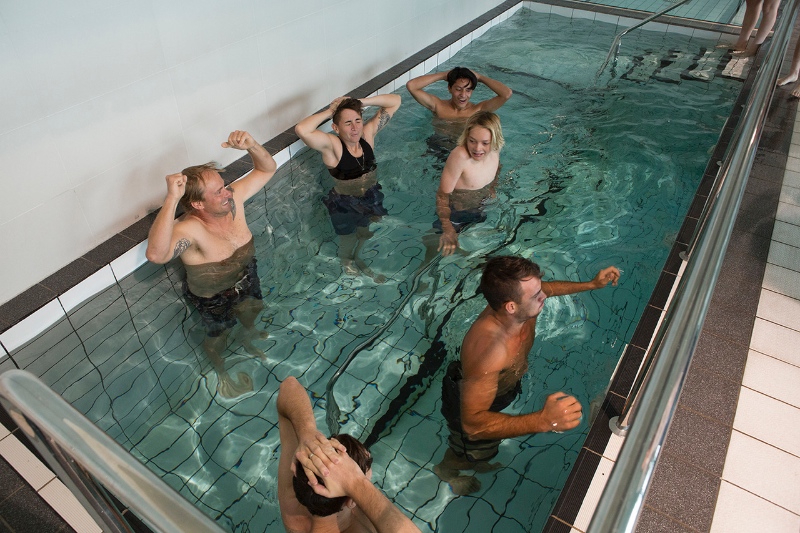
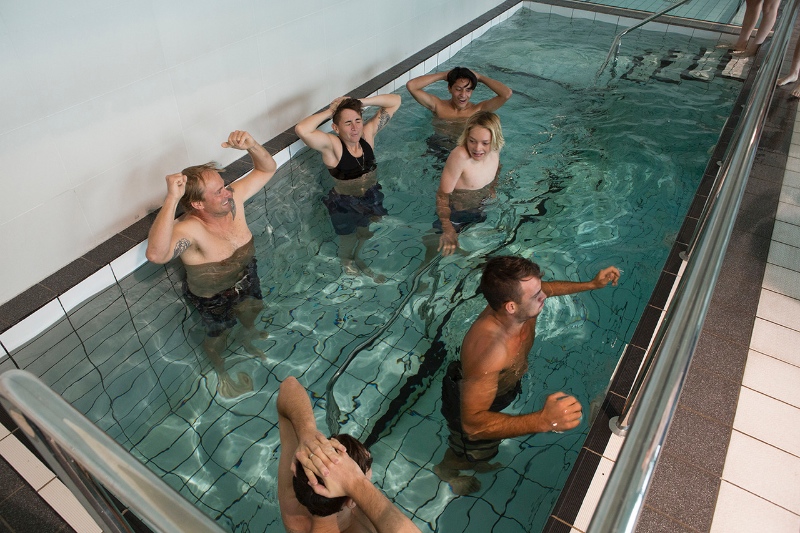
Ice Bath (pic: Donnini)
What was taught on the camp?
We started off on the first day with having three snow Olympians talk about the Olympics and how it differs from other events. The Olympics is massive. Case in point, we are planning now for an event that is in three years. An event that doesn't just build stadiums, it builds cities. I don't think any other event compares!
We had Belle Brockhoff, and Cam Bolton from Snowboard boarder cross and Dave Morris from aerial skiing chat to us. The Olympics is very different to other events in that it is a way bigger deal, and there is way more media, and perhaps more pressure. They explained how they got through it all. The skaters were stoked to hear what they had to say and Dave's silver medal got passed around. I think the skaters were inspired buy the snowboarders because as a board sport they could relate to them. Also because snowboarding is also a fairly new sport to the Olympics so it was comparable to skateboarding.
We also gave info to the skaters on how we expect a skater is going to have to go to qualify for the Olympics, and what we could expect a skater that goes in that direction is going to have to be doing. In short, they are going to have to be ripping hard at events like the Park Series, Street League and XGames. If they aren't skating those events you can assume they wont make the Olympics.
Also, that Australia is not guaranteed any spots into the Olympics. Skaters are going to have to be the best in the continent to make it. No country except for the host country is guaranteed a starting spot. Thats one of the big misnomers about the Olympics is every country gets a representative. Thats not true. For skateboarding there is 20 men for Street, coming from the 5 Olympic Continental regions, and 20 women. Thats the same for park.
After that we hit Prahran for a session. It was a fun one.
The next day we hit StKilda first thing for a session, then went to the Victorian Institute of Sport .
There there was a talk on recovering from soreness from a heavy days skating the day before and recovering from sprained ankles and stuff like that. They took us for an ice bath and we were shown how to use a pool to recover your body. We did a bunch of stretches and they showed us different tools for fixing your body, like foam rollers, elastic bands and stuff like that.
We tried to keep it practical, we used Jedd McKenzie as an example. He had a mad swallow from the nigh before session and had to fly to the USA for the Combi comp the day after the camp. We had the physic Andrew Fooks explain all the details about what you need to do when you have a massive swell bow before a long haul flight.
The next session had a nutritionist show the skaters how to make healthy food choices, took the skaters in the kitchen and showed them how to make different sorts of healthy foods.
We then had a workshop on skate business, talking about the skate industry, sponsorship and social media, as well as a bit on contracts and obligations. I think that type of thing is something any person going a skate career should learn at least the basics of.
We had ASF president Guy Gibbons, who is a lawyer explain things to do with contracts and obligations as well as another ASF director Paul Hogan go over things to do with sponsorship on an Olympic level. He is a Rugby player manager so he is well versed in that stuff.
We also pointed out to the skaters that if they want to succeed in skateboarding then they really have to follow the traditional path of getting coverage and video parts, and have a big social media presence. After all the Olympics is only two weeks every four years.
After that there was some info on strength and conditioning. It was a long day but all the skaters were into it.
The last day we hit StKilda for another session that was fun, and then had lunch. It was a lot of fun, super informative and I think the skaters were stoked and inspired.
I think we reached all of our goals. The kids were interested the whole time, we had some mad sessions. I think we inspired the skaters. My personal goal with all this stuff was to keep everything we did relevant to skateboarding on any stage as well as the Olympics. We really want Australian skaters to succeed in all areas of skateboarding. 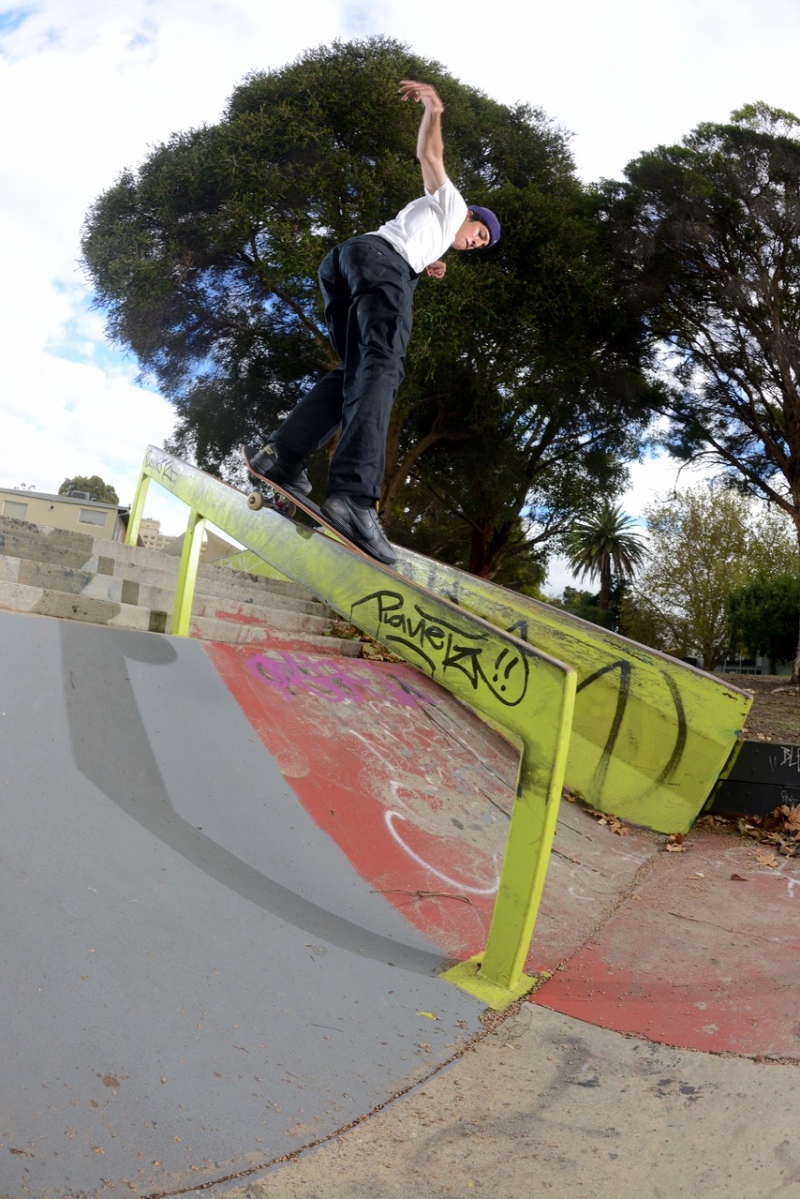 Noah Nayef Bs Smith.
How did the ASF come about?
A few years ago, when SBA fell over and failed with their National Series I was fairly public in making sure it wasn't something that went unnoticed. Soon after, as a result of Skate Australias problems they were unfunded by the Australian Sports Commision. At that stage Skateboarding didn't have an active National Organisation.
Around then I was approached by a number of unhappy campers about Skate Australia and we proposed a solution a National Skateboarding Organisation that was solely dedicated to skateboarding, one that wasn't a service provider, but a facilitator and enabler to people that worked in grass roots and organised skateboarding.
An organisation that worked between all the independent business, individuals, clubs, skate shops and whatever to collate and disseminate information and sanction events. An organisation thats highest goal above everything else was the well being of skateboarding in Australia.
We wanted to create an organisation that did not compete with people and the skate industry, but helped them, and was a conduit between government offices that wanted to work with skateboarding. Before SBA fell over I just started a business running skate events, and the first thing I noticed was SBA was a service provider that competed with everyone, rather than helping them. I really felt that any organisation that worked in skateboarding needed to enable and facilitate rather than compete with them.
From the outset ASFs vision was to be inclusive of everyone who works in skateboarding. The goal was to have affiliates of all types (anything from clubs to skate shops to individuals) all over the country that would take care of grass roots and organised skating, which is basically contests. We have achieved that, and are growing. If you work in grass roots or organised skateboarding events the ASF reason for exisiting is to help you.
I was lucky enough to be introduced by Donny Fraser, who was instrumental at the start of ASF, to Guy Gibbons who is now the ASF Chairman. He is a lawyer that has a history in motorsport, sports management and surfing, from then I met the other directors Paul Hogan who works in athlete management in the NRL and Dave Cowling who is an accountant. I am also a director.
From the word go it was a great working relationship. It is a volunteer run organisation, nobody gets paid, so to have volunteers with the skill set we have is one that has been really successful. Actually its been absolutely vital we couldn't have gotten to where we are today without highly skilled professionals devoting their time. Paul, Guy, Dave and Donny have been absolute champions. At the very least its a regular part time job for all of us that we don't get paid for. Its a lot of time, but its rewarding and we are progressing fast.
Also, I have been on the Executive Board of the International Skateboarding Federation for a few years before ASF so to have that has been really valuable to the project as well. Through that I worked with John Coates on an international level with the Olympics where he was great for skateboarding and and really supportive of skateboarding in Australia. The ISF is a great organisation too. Its mantra is Skateboarding by skateboarders and has an executive board full of skateboarders like Neal Hendrix, Tony Hawk, Chris Cole and Letitia Bufoni.
The ASF has now been going for three years. Its been a lot of hard work, but its super satisfying to see that we are progressing so much.
We created an insurance policy to get to affiliates cheaply so they can run events easier. We share information on how to work with councils, do risk management and all the bureaucratic stuff that doesn't come so naturally for skaters. Basically facilitate and enable people to work with skate events.
We have made courses and accreditation for level 1 and 2 skate coaches, as well as event management courses. We want to spread the knowledge so skateboarding can grow. We aim to empower anyone who works with grass roots and contest skating. We don't see a reason to get into the media side, or try and base what we do on the cultural side of skateboarding because for the past thirty years that side has absolutely thrived in the private arena, and we really don't want to compete with the people and organisations that basically built skateboarding as it is today. I want to make sure ASF helps people in skateboarding, not compete with them.
We built a sanctioning system so independent event organisers have their results and riders put into an Australian ranking. We were stoked to straight off the bat have good relations with Bowlarama, and the Australian Bowlriding Championships at Newcastle as well as Bowlzilla, ASCI, Catalyst, Monster, King Of Concrete and other events so when we put all the results into the rankings it really is accurate. Anybody can get their events sanctioned and get their results put into the rankings. Its fairly cheap.
We have affiliates all over Australia, Vic, NSW, WA, Qld, NT, Tas, basically everywhere and growing.
Also our parent organisation events, the ISF, count for a riders rankings too. So if a skater goes in Street League, Vans Park Series or any ISF events, they get points to their National ranking. There are 6 different levels of sanctioning.
If you win a one star you get a few points, if you win a six star you get loads of points. The weighting is proportionately staggered, and the star rating depends on amount of prizemoney, weather the event has certain aspects like webcast, telecast, and stuff like that.
At present our number one on street is Shane ONeill, On Park its Jack Fardell.
We are also stoked that the past two years we played a part in selecting the open Oceania spots into the World Championship Qualifier at Street League in Barcelona. Last year we chose Tommy Fynn and Chima Ferguson. This year it was Dane Burman and Jackson Pilz.
We are stoked to have all the bowl and park contests all sanctioned, and we have Australian Championships in Vert, Bowl and this year we will be running our Street Championship series. Its all run by different affiliates, and the ASF bonds it all together with a common ranking system, and knowledge base.
I really feel like it was something we should of had decades ago.
Recently we started the High Performance program which has meant collaborating with the Australian Institute of Sport and working to develop skaters for the Olympics working with the Australian Olympic Committee. The Australian Olympic Committee have been really supportive to skateboarding. All the skaters we have approached have been really receptive to our High Performance program, and Olympic program too.
And also one of our affiliates Monster skatepark worked with us and Sydney University to start an athlete scholarship program. Mikey Mendoza and Amar Hadid got scholarships to uni for skating.
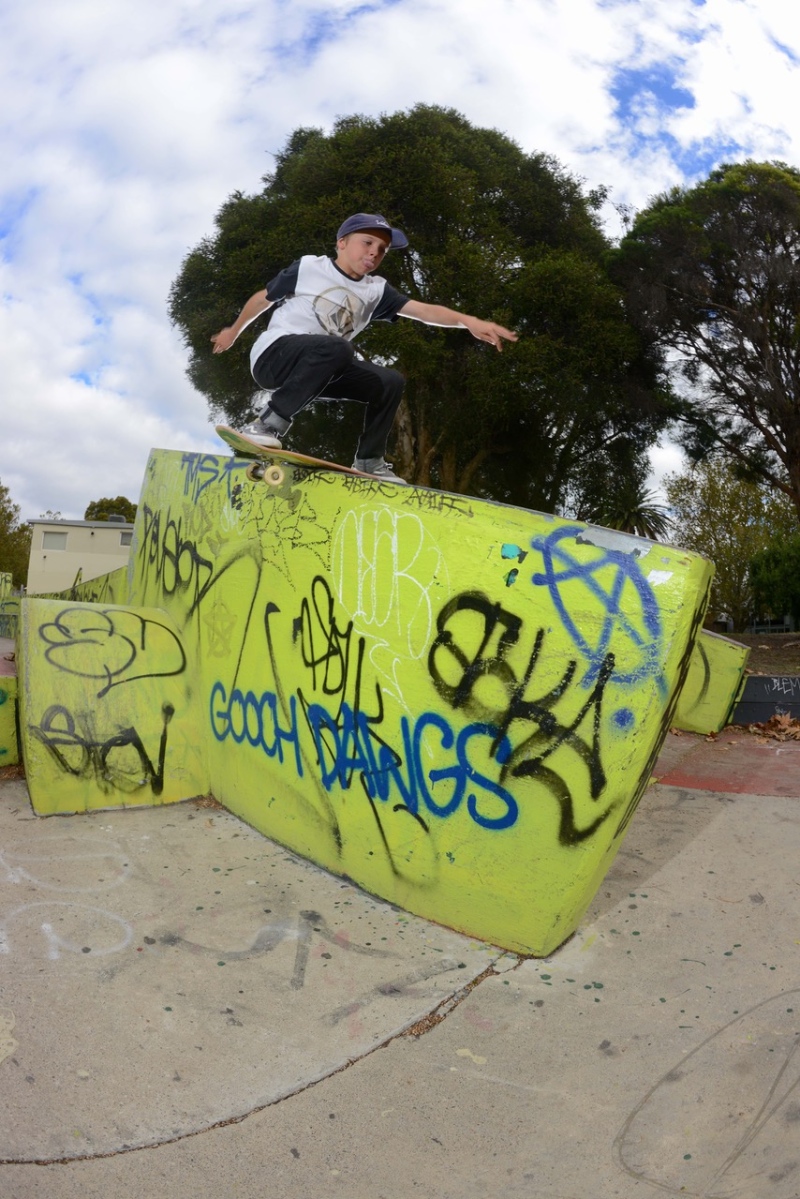 Ethan Copeland, Boardy. (Pic: Mapstone)
Whats Next for the ASF?
We really have a lot on, which is great. We have loads of comps and grass roots on every weekend all over Australia, and they are delivered by the affiliates.
We have two more Olympic Camps this year, and three each year leading into Tokyo in 2020. They are planned for the Gold Coast and Canberra.
Day to day at the moment there is a lot of admin, which can be annoying because at the moment the organisation is completely volunteer run. But the cool thing is that because we are actually achieving milestones and doing cool stuff its all worth while. For myself its not so bad because the people involved in running it are great at what they do and are good people. Im learning a lot.
At the moment skateboarding isn't funded by the Australian Sports Commision, so skateboarding as a sport hasn't gotten any sports funding since SBA flipped over three years ago. Its been a long road, but its a credit to the guys that have worked the past three years voluntarily. Its also a credit to skateboarding and the people who work in skate events in Australia that Skating events have absolutely thrived in light of all that.
Its been a great journey so far and its only going to get better.
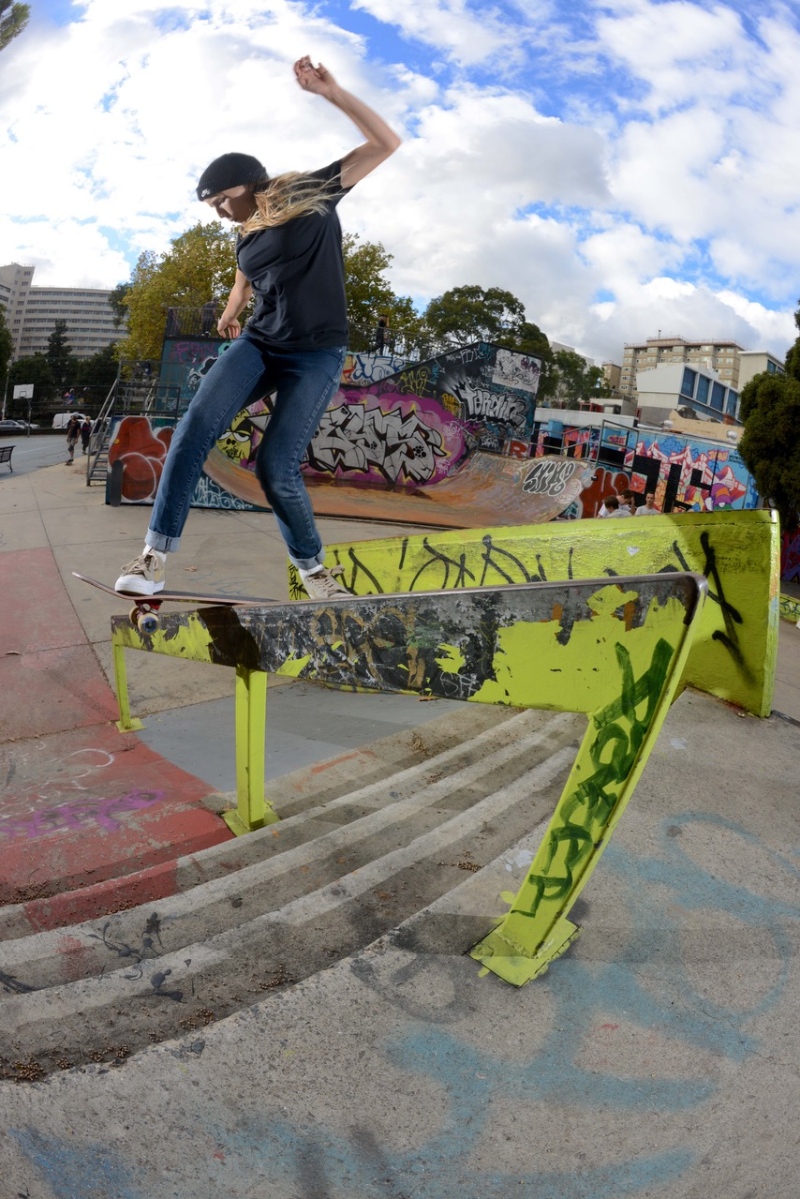
Hayley Wilson is a shredder (Pic: Mapstone)
And the Olympics?
I think the Olympics is a great opportunity for Australian skateboarding. Skateboarding in Australia rules. Australia rules. Its such a rad place to live and skate. I think most Australian skaters are proud of Australian Skateboarding and I think it will be cool to have a platform to show the world how good Australian Skateboarding is. Whoever wins gold is going to be a superstar, and we have a chance for that to be an Aussie. I think thats pretty rad.
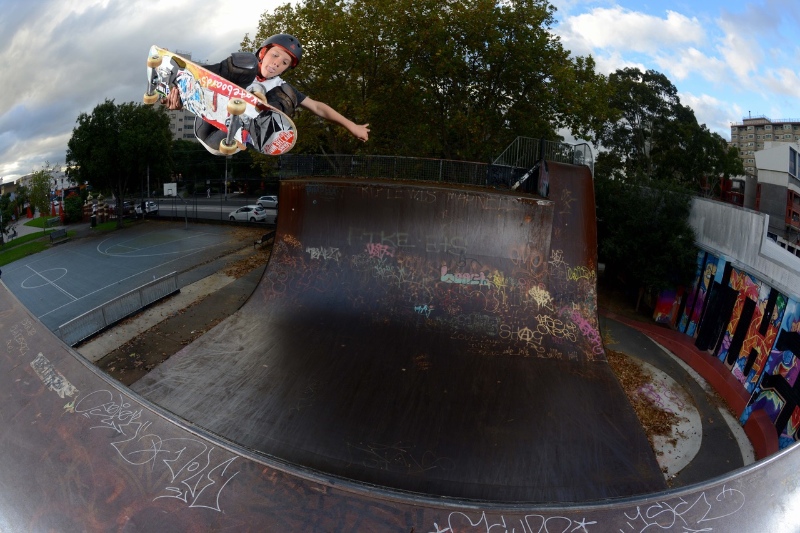
E is an all terrain machine. Stale. Ethan Copeland, Boardy. (Pic: Mapstone)
Anything else?
Yes. thanks to all the volunteers and all the affiliates and people that have helped us the past three years!
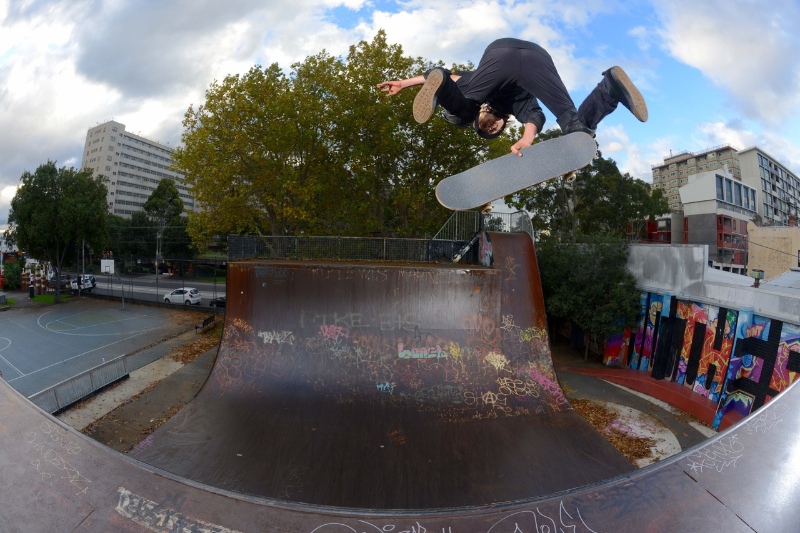
Jedd McKenzie, Heelflip indy. (Pic Mapstone)
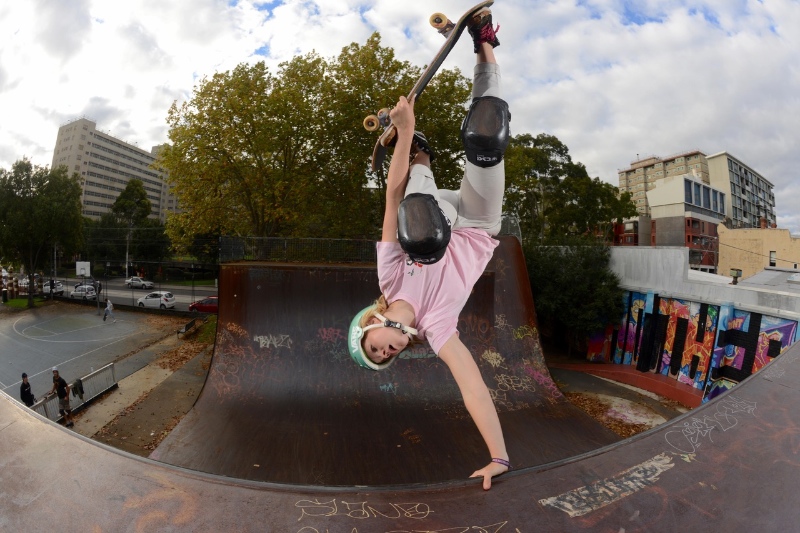
Poppy Olsen Tail High Invert. Pic Mapstone.